SHENZHEN, Oct. 28, 2026 — Shenzhen University (SZU) — The College of Management at Shenzhen University hosted an expert lecture on hospital branding on Oct. 25, bringing MBA students face-to-face with industry practice as part of the course Hospital Brand and Cultural Development.
The session, held in Room 205 of the North Building on the Lihu Campus, featured Liang Jiewei, chairman of Songyang Creative Group and a veteran brand strategist and creative director. Invited by Professor Zhou Zhimin, who leads the course, Mr. Liang addressed the full cohorts of the 2025 and 2026 MBA Healthcare Management classes.
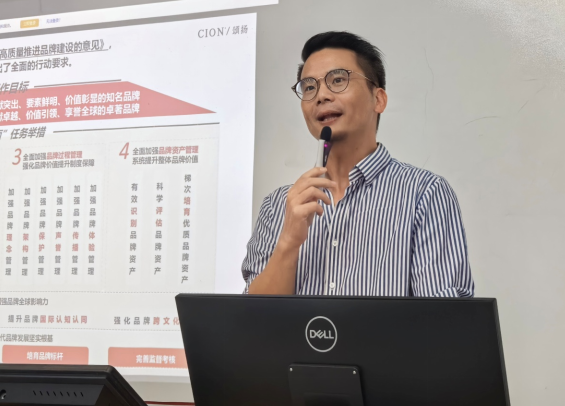
Mr. Liang opened by framing brand building within the context of national policy, outlining the top-level requirements and regulatory landscape that shape modern branding in China. He then walked students through the core dimensions of a sound brand system — brand connotation, brand culture, brand positioning, user experience and communication rollout — mapping the complete chain from strategic planning to on-the-ground execution.
Drawing on frontline project experience, he deconstructed full-service branding campaigns for benchmark clients such as GITIC Holdings, CR Mixc and Yinuo, and compared how commercial and medical brands diverge. He urged students to recognise what makes hospital branding distinctive: a medical brand is rooted in clinical quality, humanistic care and organisational culture, and must balance the discipline of branding with the medical mission and the human warmth at the heart of patient care.
The lecture was followed by a Q&A session, in which Mr. Liang answered students' questions based on his project experience and cautioned against mechanically transplanting commercial branding models into healthcare settings. He stressed that a clear brand position is essential and that brand building must grow from an organisation's core strengths.
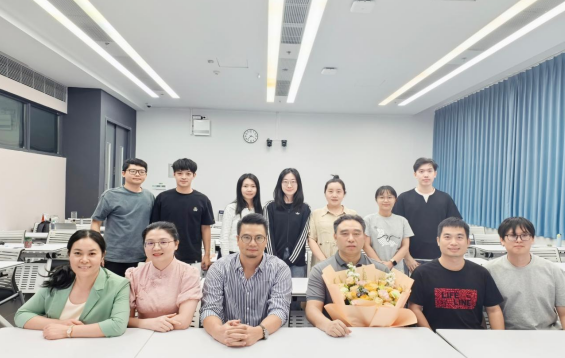
Mr. Liang then reviewed the hospital brand planning reports submitted by the students. He commended their initiative in grounding their proposals in real hospital scenarios and their managerial perspectives, while offering targeted feedback on positioning, cultural core development, experience design, communication channels, feasibility and differentiation. He encouraged students to move beyond conventional promotional thinking and build hospital brand strategies that are policy-aligned, structurally complete and practical to implement.
Students said the session broadened their understanding of hospital branding beyond long-held assumptions, with cross-industry case studies widening their strategic horizons and expert feedback offering practical direction for refining their proposals and future work in hospital brand and cultural management.
Contributed by Chen An'e, Class of 2025, MBA Healthcare Management.
Translated and reedited by Zhang Ruina, International Development Office, SZUCM